

Briefs & Drafting
SEO Content Brief Template: A Worked SaaS Example
Copy an SEO content brief template with a worked SaaS example. Set reader intent, coverage, sources, exclusions, article elements, and review criteria.
Plan useful content for SaaS, small businesses and agencies with an audience map, practical briefs and a sustainable editorial calendar.
A useful content strategy connects a reader's question to a business outcome. For a SaaS operator, that might mean helping a team evaluate an integration before starting a trial. For a small business, it might mean explaining a service before someone requests a quote. For an agency, the plan must also make client ownership and approval expectations clear.
Start with one audience and one conversion goal. Gather the questions people ask in sales conversations, support tickets and onboarding. Group questions by the decision they support, then choose one primary page for each distinct intent. An editorial calendar becomes useful after those choices are made.
This is an illustrative planning exercise, not a customer result. Imagine a scheduling SaaS whose customers ask how to coordinate appointments across locations.
| Buyer question | Page to own the answer | Supporting material | Useful next action |
|---|---|---|---|
| How do I coordinate multiple locations? | Multi-location scheduling guide | Example operating procedure | Compare workflow options |
| Can it connect to our calendar? | Calendar integration page | Verified setup instructions | Check compatibility |
| How do we avoid double bookings? | Troubleshooting guide | Reproducible test case | Try the documented configuration |
The broad guide introduces the problem and links to the narrower answers. Each supporting page links back where that context helps. The same question should not produce separate, nearly identical pages simply because it appears under several tags.
Estimate research and review effort before setting publication frequency. Keep a visible queue of ready briefs, blocked work and updates to existing pages. Agencies should separate client facts and approval rules, even when they reuse the same planning process. A smaller queue with complete inputs is easier to operate than a large calendar full of unspecified titles.
Choose a topic that connects a recurring customer question, your actual expertise and a useful business next step. Confirm that you can support the main page with specific answers rather than selecting a broad label only because it sounds popular.
Maintain a page-intent map for each client. Different clients may cover the same subject, but each page needs that client's facts, examples, audience and offer. Within one site, assign one primary destination to each intent.
Explore RoboWrite features to compare the product with the workflow your team needs. Bring one real brief, your approved brand facts and your CMS requirements to the evaluation.
Copy an SEO content brief template with a worked SaaS example. Set reader intent, coverage, sources, exclusions, article elements, and review criteria.

Turn customer interview notes into SEO content pillars with a source worksheet, distinct article questions, and a reviewed brief.
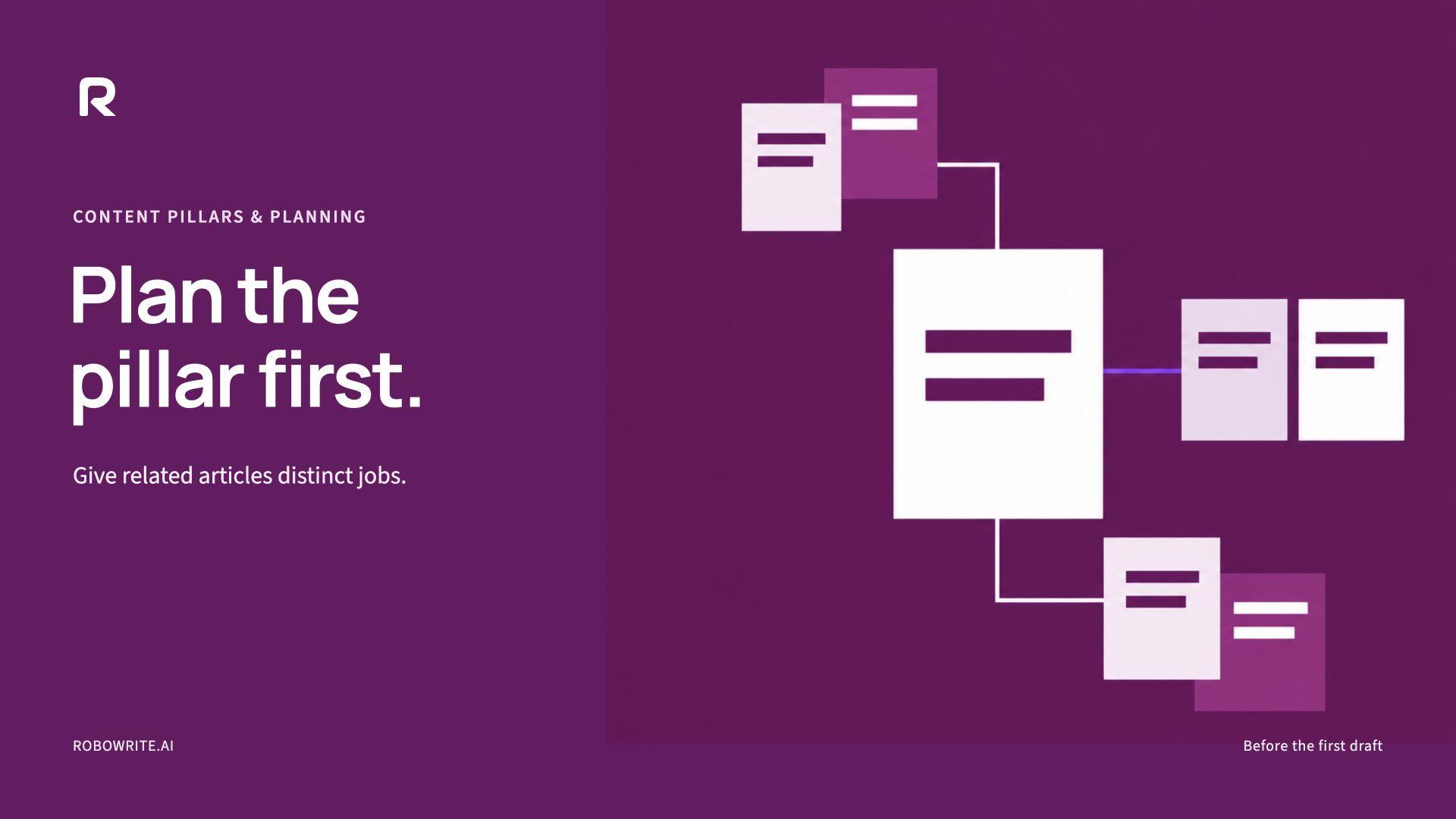
Lean B2B SaaS marketing teams should set content pillars before first draft work begins. Your team may have limited headcount, a long buyer journey, and constant pressure to clarify positioning. A pillar plan gives every SEO post a job: answer a buyer question, reinforce an area of expertise, and…
Content pillars give your content marketing a repeatable structure: choose a few topics your audience needs help with, create a useful hub for each one, and support every hub with focused articles. Instead of chasing disconnected post ideas, you build a
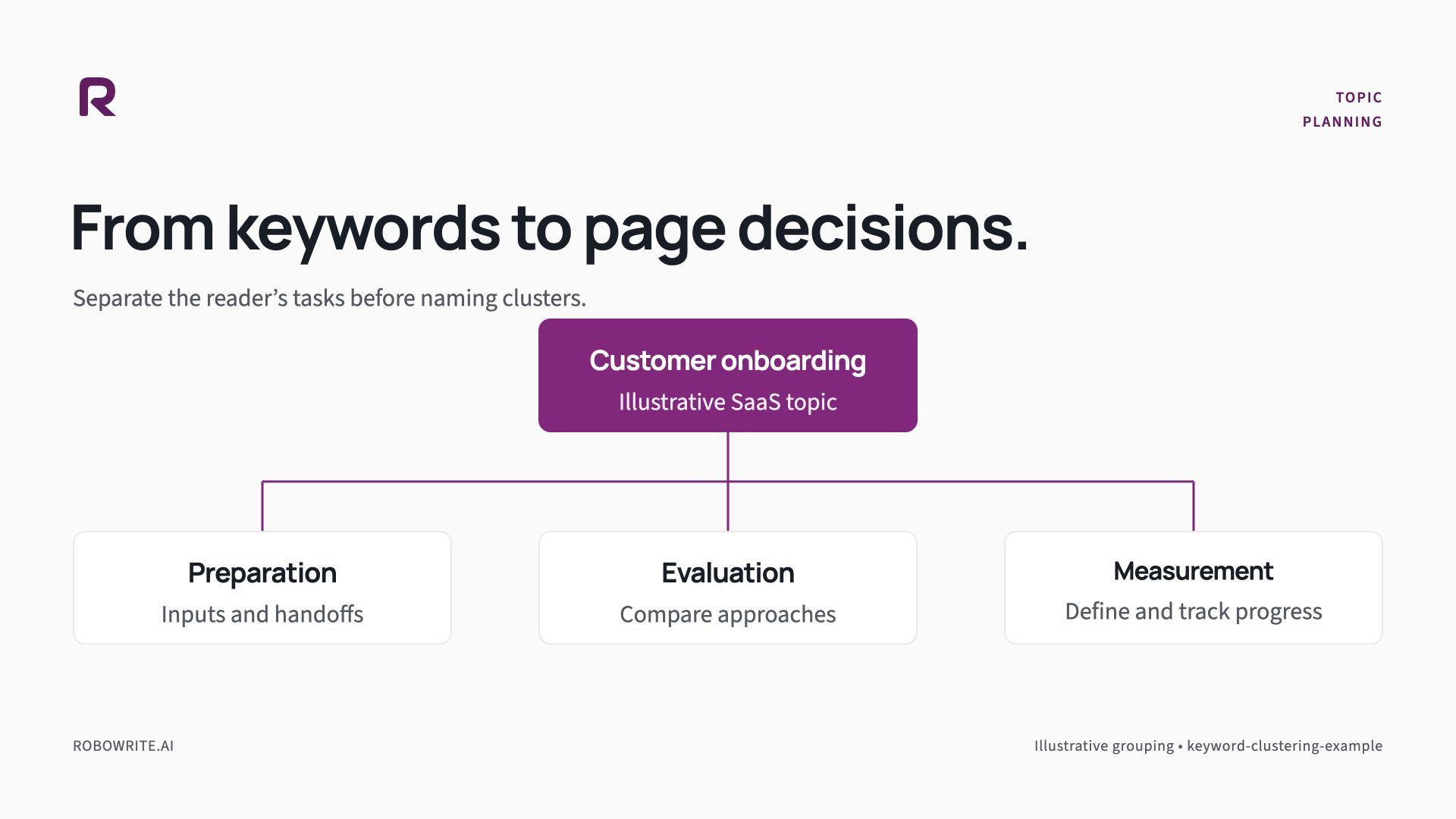
Understand keyword clusters and topic clusters with a SaaS example. Decide what belongs on one page, what needs another, and how the pages should connect.
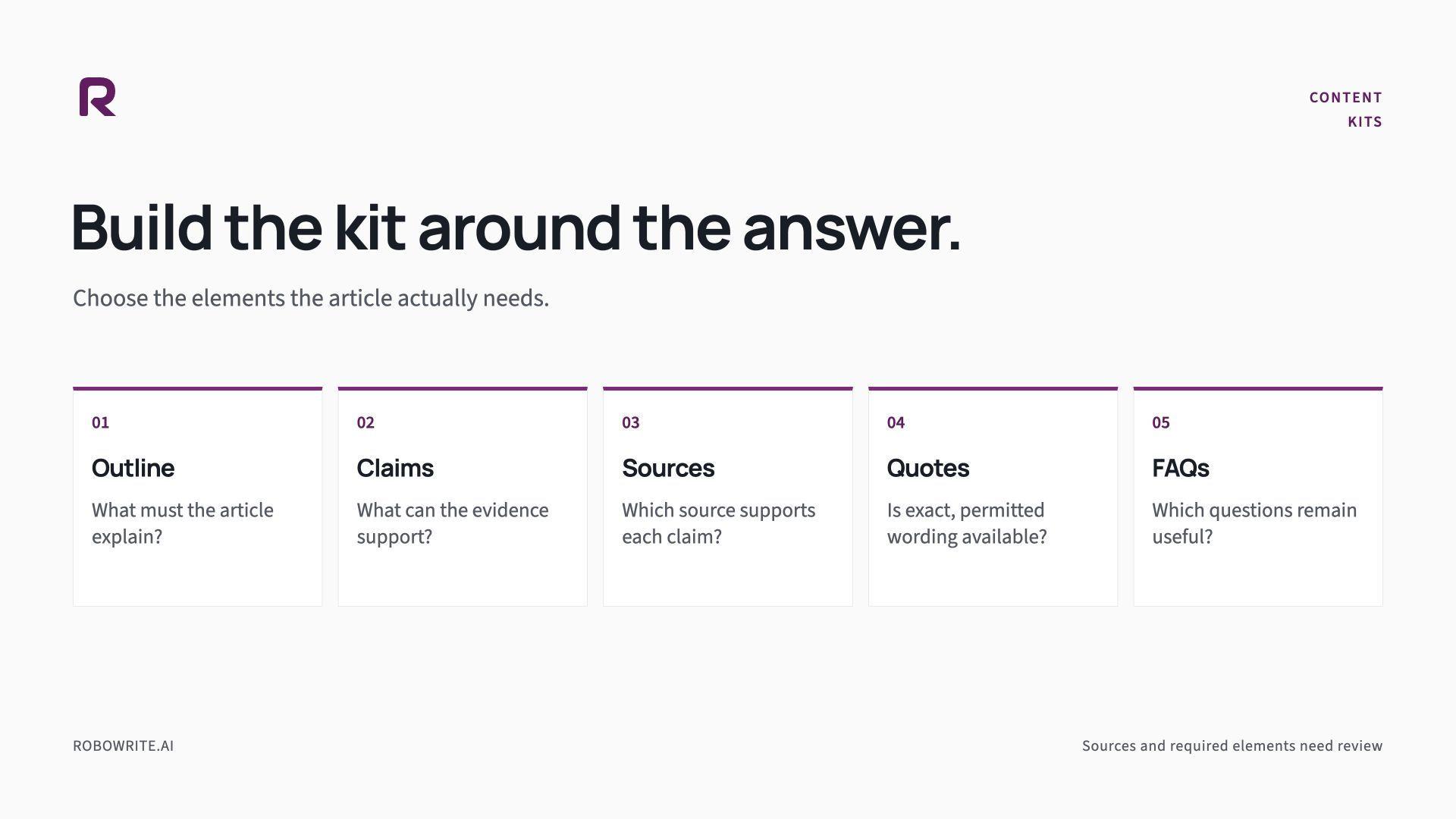
Turn a written SEO brief into Content Kit requirements. Separate coverage, facts, sources, quotes, FAQs, and review decisions before drafting.

Build a B2B SaaS content calendar with a copyable template, a worked weekly example, keyword clusters, Content Kits, and clear review owners.

Run a SaaS content audit with a copyable worksheet, worked page decisions, and a clear process for choosing what to keep, refresh, or rewrite.
Follow a practical keyword clustering example for SaaS content. Group related questions, separate intent, review overlaps, and choose an article brief.

A b2b content marketing strategy helps you publish useful SEO content on a predictable schedule without treating every article as a one-off project. For a small team, business owner, or freelance marketer, the practical goal is simple: choose topics that