

Editorial Workflows & Approvals
An SEO Content Workflow From Keyword Cluster to Reviewed Draft
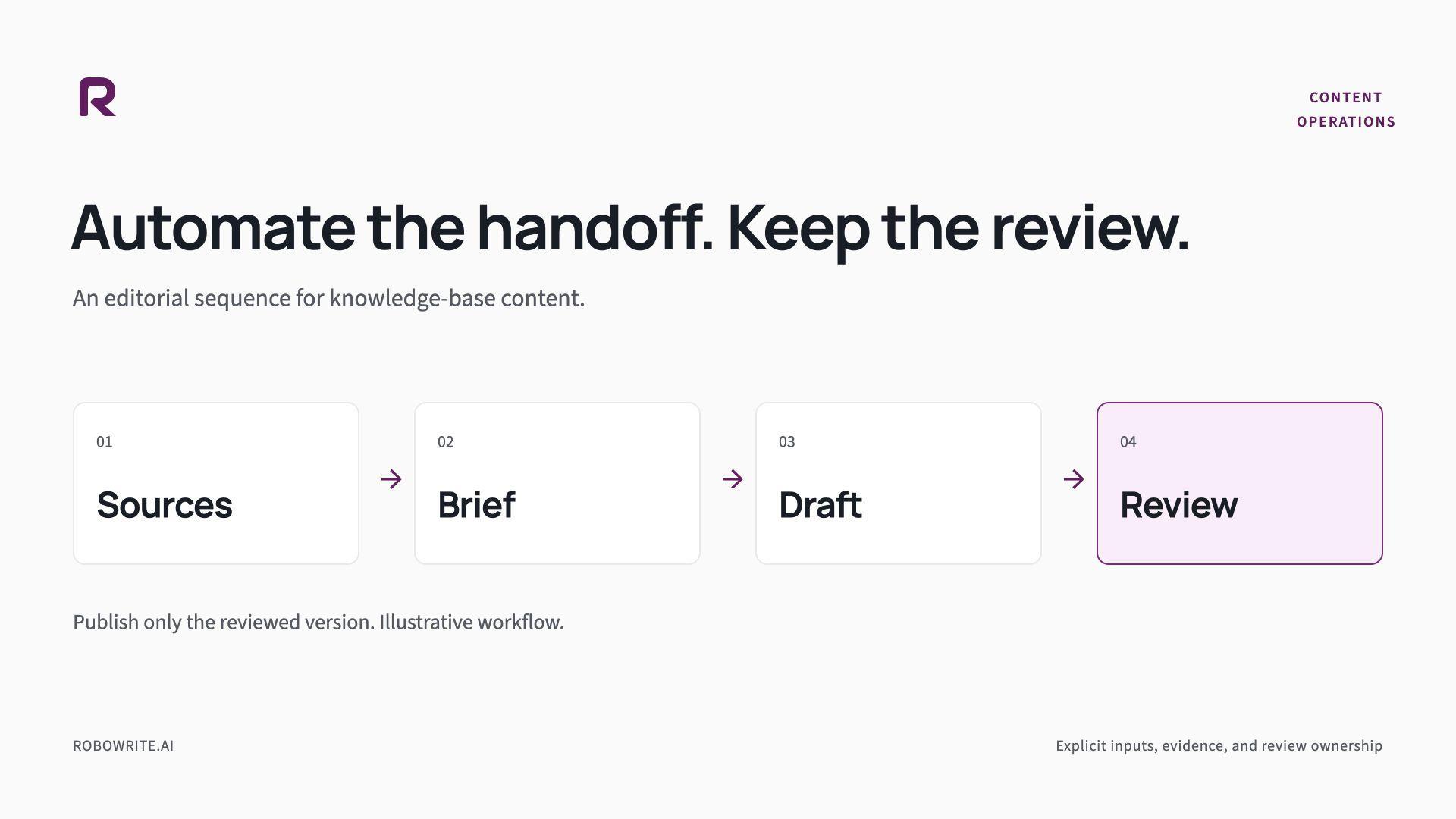
Connect keyword clusters, a focused brief, source research, a Content Kit, drafting, and editorial review in a practical SaaS content workflow.
Define editorial ownership, review decisions and release checks. Keep content moving without letting missed deadlines become accidental approvals.
An editorial workflow should answer two questions at every stage: who owns the next action, and what evidence lets the work move forward? Without those answers, automation can move a draft between tools while the actual decision remains unresolved.
Separate briefing, drafting, review, approval and publication. Approval means a named person accepted a specific version for a stated purpose. Publication is the later action that releases it to a destination. A draft can be approved for internal use without being approved for the public website.
| Stage | Owner's decision | Evidence to retain |
|---|---|---|
| Brief accepted | Is the task and evidence sufficient? | Agreed scope and references |
| Draft ready | Does the draft answer the brief? | Version submitted for review |
| Review complete | Are factual and editorial issues resolved? | Comments closed or exceptions recorded |
| Approved | Is this version acceptable for this destination? | Reviewer, version and approval time |
| Published | Did the approved version reach the intended URL? | Live URL and verification result |
These are example stages you can adapt to your team. Avoid adding a status unless it changes ownership, permitted actions or the evidence required to proceed.
Decide what happens when a reviewer misses a deadline, a product fact changes or a stakeholder requests edits after approval. Silence should leave the item waiting or trigger an escalation; it should not count as approval. If a substantive edit changes the approved version, return the affected content to review.
For agency work, name the client decision-maker and a backup contact. For a small business, the same person may fill several roles, but the decisions still need to be explicit. A brief acknowledgment such as “looks good” should identify which version and destination it covers.
Use automation for predictable handoffs, reminders and completeness checks where your tools support them. Keep a visible record of blocked work so the team can distinguish a missing input from a failed integration. Do not retry a publication action blindly when the first attempt has an uncertain outcome; verify the destination first.
Measure where drafts wait and why they return for rework. A shorter queue is useful only if factual review and release verification remain reliable. Start by documenting the current process for one article, then remove ambiguous ownership before adding more automation.
The related guides below provide concrete operating examples. Use them to agree on one review path that your team can follow consistently.
A small team may combine roles, but it should still record the review decision and verify sensitive claims. Where specialist or client approval is required, that requirement remains separate.
Assess whether the change affects facts, meaning, offer or destination. Material changes should be reviewed again so the approval refers to the version actually released.
Connect keyword clusters, a focused brief, source research, a Content Kit, drafting, and editorial review in a practical SaaS content workflow.
Build a content brief automation workflow with approved sources, explicit inputs, review ownership, and a worked SaaS knowledge-base example.

Shipping one blog post each week is easier when the team shares a single checklist. This post is a short operating list you can copy into your project tracker. Before drafting Pick one audience problem, not three Name the primary keyword the page should

A practical editorial workflow has four stages: brief, draft, review, and publish. Each stage needs an owner, a time box, and a clear definition of done. This guide describes a process marketing teams can run every week without inventing a new process for